

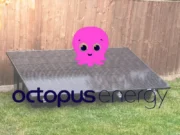










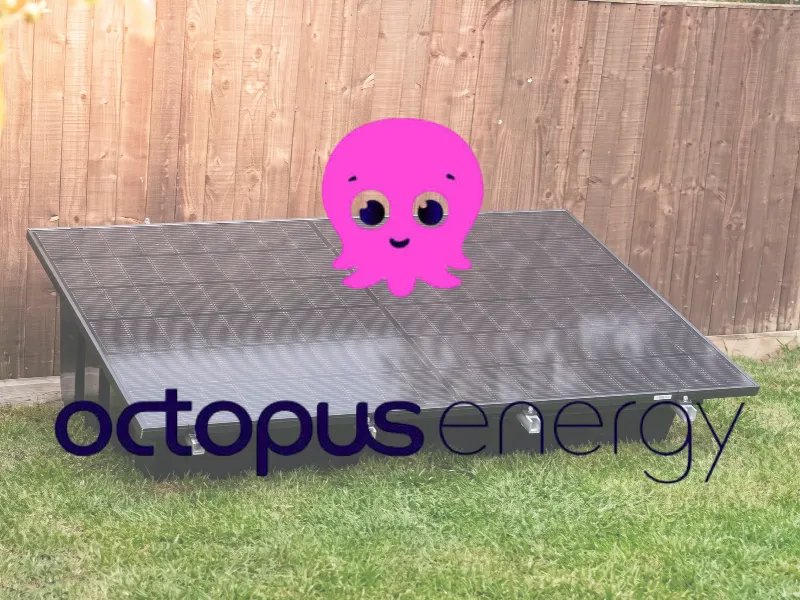
The supplier says a two-panel kit could cut a small business’s electricity bill by up to 23%. But that estimate relies on modest energy use, suitable sunlight and the ability to use or export the electricity generated.
Octopus Energy has started selling plug-in solar panels to small businesses across Great Britain, opening a new market for shops, cafés and other firms that cannot install conventional rooftop systems.
The business offer launched on 16 November 2026. It follows the company’s household launch in August, when Octopus says its first stock sold out within two weeks. The supplier also says it has restocked twice in less than a month.
The appeal is straightforward. Businesses can generate some of their own electricity without installing a full rooftop solar system. That could interest firms renting their premises or operating from buildings with unsuitable roofs.
But the financial case depends on more than the purchase price. Businesses need enough daylight, a suitable place for the panels and electricity demand that matches when the system generates power.
What Octopus is selling
The kits use 460W bifacial solar panels, which can capture sunlight from both sides. Customers can choose a one-panel or two-panel setup.
The panels can be mounted on a wall or placed on the ground. A small inverter converts the electricity they generate into power that can be used by the business. The system connects to a suitable mains socket, and output can be monitored through the Octopus app.
The advertised prices are:
- One panel: £450
- Two panels: £650
Octopus is targeting cafés, shops, hairdressers and offices. These businesses may have outdoor space but lack the roof access, budget or landlord permission needed for a conventional solar installation.
The portable design could also help businesses that move premises. However, the panels still need a suitable position and permission for any external fixtures or changes to the building.
What does the 23% saving claim mean?
The headline figure comes from Octopus, not an independent assessment of typical business savings.
The company based its estimate on a small business using around 2,500kWh of electricity a year. Its example assumes a two-panel kit costing £650 and annual generation of 828kWh.
Octopus says the business could save up to 23% on its electricity bill by using the solar power on site and exporting some surplus electricity.
That example is useful, but it should not be treated as a forecast for every shop or café.
A business using 2,500kWh a year has a different energy profile from a restaurant running refrigeration, cooking equipment and ventilation throughout the day. A firm with higher electricity use may save more money in total, but the same panels are likely to cover a smaller share of its consumption.
Timing also matters. Solar panels generate electricity during daylight hours. A business that uses most of its power during the day may be able to consume more of what it produces. A business that is closed during sunny hours may need an export tariff to get value from surplus generation.
The three-year payback claim needs the same caution. Octopus says a two-panel system could repay its £650 purchase cost in that time when the business uses the electricity and has a suitable export tariff, such as its Panel Power tariff.
That is a company estimate based on specific assumptions. Actual payback will depend on generation, electricity prices, the amount used on site and the export rate available.
The rules businesses need to understand
Plug-in solar became legal to buy and use in Great Britain on 27 August 2026, following changes to product safety regulations.
The government created an approval route for plug-in solar devices that meet its interim product specification. The rules do not cover plug-in batteries.
The main points for businesses are:
- Output limit: compliant plug-in systems are limited to 800W of power entering the electrical socket. This is the AC output limit, not necessarily the combined rating printed on the solar panels.
- Compliant equipment: check that the exact product model appears on the Energy Networks Association’s register of compliant devices.
- No plug-in battery: the current rules cover solar systems without battery storage. A separate plug-in battery cannot simply be added under the same approval.
- Registration: plug-in solar devices must be registered through the official UK registration service.
- Suitable electrics: the device must connect directly to a suitable socket. Extension leads and multi-way adaptors should not be used.
The Energy Saving Trust, working with the Department for Energy Security and Net Zero, also advises owners to check the condition of their electrical installation before buying. Outdoor sockets must be weatherproof and installed by a qualified electrician.
There is an important point for business owners: much of the consumer guidance is written for homes. The Energy Saving Trust currently says one plug-in solar device should be used per property. Businesses should confirm how this applies to their premises and electrical arrangements with the supplier and local network operator before connecting a system.
Why the product could appeal to smaller firms
Traditional rooftop solar is not practical for every small business.
A tenant may not be allowed to make permanent changes to a roof. A shop in a shared building may have no control over the main structure. Smaller firms may also be reluctant to commit thousands of pounds to equipment they cannot take when they move.
A plug-in kit offers a smaller starting point. It does not replace a full solar installation, but it gives some businesses another way to generate electricity.
Octopus points to a YouGov survey of 1,034 small and medium-sized business decision-makers. It found that 62% knew solar could reduce energy costs, while 18% said their business had installed it.
The survey was commissioned by Octopus Energy for Business and carried out online between 17 and 27 April 2026. It excluded Northern Ireland, so the results should be read as supplier-commissioned research rather than a complete measure of solar adoption across every UK business.
The launch also gives Octopus another product to sell to its business customers. The company says its business energy division supplies nearly 120,000 customers, ranging from independent high-street firms to larger companies.
Five checks before placing an order
The price may look manageable, but business owners should check a few things first.
1. Get permission from the landlord.
Ask before attaching panels to a wall, railing or other part of the building. Check the lease and any building-management rules.
2. Check the electrical installation.
The socket and circuit must be suitable. Do not rely on an extension lead to reach an outdoor position. Ask a qualified electrician if the wiring or socket condition is uncertain.
3. Check the location.
An unshaded, south-facing position generally produces better results. East- or west-facing panels can still generate electricity, but shading and orientation can reduce output.
4. Confirm the export arrangements.
Do not assume surplus electricity will automatically earn money. Ask the supplier whether the business is eligible for an export tariff and check its rates and conditions.
5. Calculate the likely payback.
Compare the expected annual generation with the electricity the business uses during daylight hours. Include the kit price, any mounting or electrical work, and the value of exported power.
Business owners should also check their insurance and any relevant planning, fire-safety or building requirements before installing the panels.
A useful option, but not a replacement for rooftop solar
Octopus Energy’s launch gives smaller businesses another way to generate some of their own electricity. The low entry price and portable design may suit firms that rent their premises or have limited space.
The system is not designed to power an entire business. Its value comes from reducing the amount of electricity bought from the grid when the panels are generating.
For a small business with daytime demand and a good installation position, that could make a difference to running costs. For a premises with high energy use, heavy shading or little daytime activity, the savings may be much less attractive.
The sensible starting point is not the advertised 23% figure. It is the business’s own electricity use, the amount of sunlight available and the value of any power it can export.