











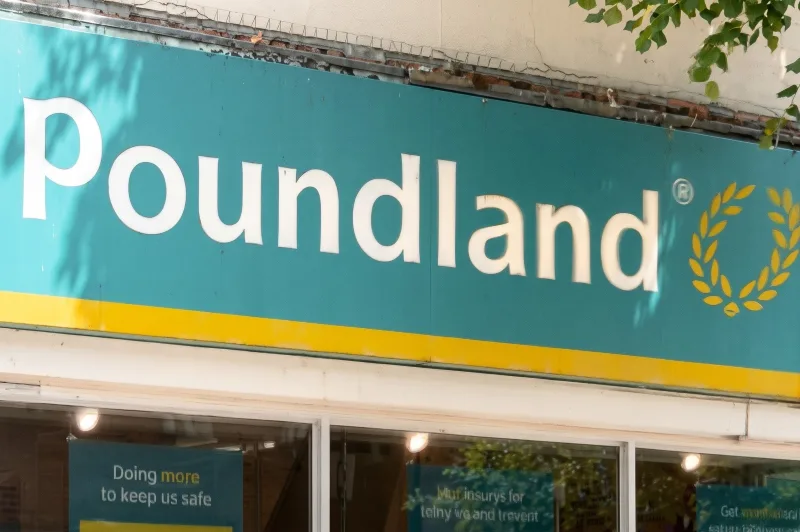
Poundland faces an administration deadline on 12 November. Its management says trading has improved, but suppliers are still waiting for payments and new stock orders have reportedly been blocked.
Poundland is still trading, but its future remains uncertain. The discount retailer filed a notice of intention to appoint administrators on 29 October. The legal protection period is due to expire on 12 November.
For the company’s suppliers, the problem is already serious. Some businesses have delivered Christmas stock without receiving payment. Others have products made specifically for Poundland that may be difficult to sell elsewhere.
Poundland founder Steve Smith has warned that as many as 30,000 jobs could be affected across the wider supply chain if the retailer collapses. This is his estimate, not an official forecast.
The latest developments also raise questions about the company’s financial position. Poundland’s managing director says the business has returned to operating profitability, while its owner argues that it still cannot generate enough cash to operate sustainably.
Here is what has happened, why suppliers are worried and what businesses should consider before sending more stock.
Why is Poundland facing administration?
Poundland’s current owner, US restructuring firm Gordon Brothers, bought the retailer from Pepco Group in June 2025 for a nominal £1.
Gordon Brothers later launched a sale process as it tried to find a buyer for the business. However, the process failed to produce an acceptable offer for the entire chain.
Poundland’s directors filed a notice of intention to appoint administrators on 29 October. The filing gives the company a short period of legal protection while it explores a rescue or sale.
The retailer operates around 600 UK stores and employs thousands of people. Its stores have continued trading during the process.
Gordon Brothers has reportedly rejected a proposal from Martin Property Group that would have kept Poundland operating as one business. Other retailers have shown interest in buying stores or parts of the company.
The potential buyers include businesses such as Tesco, B&M, Iceland and The Range, although interest in individual stores does not mean a deal has been agreed.
The central disagreement is whether Poundland can be rescued as one retailer or whether selling its stores separately would produce a better outcome for its owner and creditors.
Poundland reports an £86m improvement, but suppliers remain unpaid
One of the most important developments came on 9 November.
According to ITV News, managing director Barry Williams told staff that Poundland had moved from an EBITDA loss of £68.1 million in the financial year to September 2025 to an EBITDA profit of £18.1 million in the year to September 2026.
That represents an improvement of £86.2 million.
Williams also reported stronger sales at stores that remain open. Like-for-like sales increased by 7% in the first period of the new financial year. During the week that included Halloween, they were 11.4% higher than a year earlier.
The figures have not yet been audited or published as final accounts.
There is an important distinction between operating profit and available cash. EBITDA measures earnings before interest, tax, depreciation and amortisation. It does not show how much cash a company has available to pay suppliers, lenders and other bills.
Gordon Brothers has argued that Poundland remains financially vulnerable. In a letter to the Government, the owner pointed to rising inflation, staffing costs and losses caused by shoplifting.
ITV News also reported that Poundland had been unable to pay suppliers for new stock since 27 October, after access to credit facilities and trading cash was restricted. As of 3 November, around £25 million in cash was reportedly inaccessible to the retailer’s management.
This creates a difficult position. Poundland may be reporting better trading at its existing stores, but it still needs money and supplier support to replace stock and keep shelves filled.
The difference between those two financial pictures is central to the dispute over the retailer’s future.
Why small suppliers could suffer heavy losses
Poundland’s problems reach well beyond its own stores and employees.
The Guardian reported that around 2,000 suppliers could be affected if the chain collapses. Some have already stopped deliveries because they are concerned about receiving payment.
The newspaper reported several examples of businesses facing significant exposure.
Universal Toiletries, a fragrance and toiletries supplier, said it faced a financial risk of around £1.5 million. Almost £700,000 related to stock already delivered but not yet paid for. The remaining exposure included undelivered products and components.
Toy supplier John Leisure faced the challenge of finding new buyers for more than one million products. Many had been made specifically for Poundland and were intended for future seasonal sales.
Highcrest Retail Brands, a confectionery supplier based in Bradford, also warned that it could lose millions of pounds in payments for stock already supplied.
These examples show why a retailer’s collapse can affect businesses that never appear in the headlines.
A supplier may have already paid for materials, manufacturing, packaging and transport. If its customer then fails, the supplier could lose both the payment and the value of products that cannot easily be sold elsewhere.
The impact can spread to the supplier’s own employees, manufacturers and smaller subcontractors.
A listed supplier has already reduced its exposure
The risk is not limited to small family businesses.
Supreme plc, a UK manufacturer and supplier of fast-moving consumer goods, disclosed on 30 October that Poundland was one of its customers.
In an announcement published through the London Stock Exchange, Supreme said it had taken steps to manage its exposure. Its net receivables exposure to Poundland stood at £460,000.
That figure illustrates how suppliers are reviewing their financial risk as the situation develops.
For smaller businesses, the impact can be much harder to absorb. A large company may have several customers and enough cash to manage a delayed payment. A smaller supplier that depends heavily on one retailer may have fewer options.
What does the notice of intention to appoint administrators mean?
A notice of intention to appoint administrators is not the same as entering administration.
It is a legal step that gives a company a short period of protection while it considers its options. The notice normally provides a 10-business-day moratorium, subject to the relevant legal rules.
During this period, certain creditor actions are restricted. The company can continue trading while it explores a rescue, sale or administration.
Poundland filed its notice on 29 October. The current deadline is 12 November.
Possible outcomes include a sale of the whole business, a sale of individual stores or assets, or the formal appointment of administrators.
If administrators are appointed, they will assess the company’s position and decide how to proceed. Suppliers owed money may need to submit claims and wait to learn whether any payment can be recovered.
The Government confirmed in Parliament on 2 November that Poundland was not yet in administration and continued to trade.
Ministers said they were monitoring the situation and speaking to the parties involved, but would not interfere in the commercial negotiations.
What suppliers should do now
Businesses supplying Poundland should review their exposure before agreeing to further deliveries.
The following steps are worth considering. Suppliers with significant unpaid invoices should get advice from a solicitor or insolvency practitioner.
1. Calculate the full amount at risk
Add up unpaid invoices, delivered stock, goods in transit and orders already being manufactured. Include products and materials that cannot easily be sold to another customer.
2. Review new orders before sending stock
Do not assume that another delivery will be paid for simply because previous orders were accepted. Consider whether your business could afford to lose the value of another shipment.
Some suppliers may consider shorter payment terms, payment upfront or cash on delivery. Any change should be agreed in writing.
3. Check your retention of title clause
A retention of title clause, sometimes called a Romalpa clause, may help a supplier retain ownership of goods until payment is made.
However, the wording of the contract matters. The goods may also need to remain identifiable and recoverable. Suppliers should obtain legal advice before trying to recover stock or enter premises.
The Government specifically raised retention of title clauses when suppliers’ concerns were discussed in Parliament.
4. Contact your trade credit insurer
Businesses with trade credit insurance should check whether their policy covers the current situation.
Find out what needs to be reported, whether cover has changed and whether there are deadlines for submitting claims. Do not assume that an existing policy automatically covers every unpaid invoice.
5. Review your cash flow
Work out when wages, rent, VAT and supplier payments are due. Compare those dates with the money you expect to receive.
If a delayed Poundland payment could leave a gap, speak to your bank or accountant early.
6. Speak to HMRC if tax payments become difficult
Businesses struggling to meet tax bills may be able to discuss a Time to Pay arrangement with HMRC.
An agreed payment plan can spread eligible tax debts over a period of time. Businesses should contact HMRC before the situation becomes harder to manage.
7. Keep all supporting documents
Save purchase orders, invoices, delivery notes, contracts, emails and payment records. These documents may be needed if administrators are appointed and creditors are asked to submit claims.
8. Register your exposure with the relevant trade association
The Government highlighted the Home and Gift Association’s open register, where suppliers can record their financial exposure to Poundland.
Trade associations may also help members share information and understand what steps to take as the situation develops.
What happens next?
Poundland’s immediate deadline is 12 November, but the outcome remains uncertain.
The company has attracted interest from buyers looking at different parts of its business. A full rescue could allow the retailer to continue operating and preserve more existing supplier relationships.
A break-up could keep some stores open under new owners, but it may leave other locations and supplier contracts behind.
The parliamentary Business and Trade Committee is also due to hear evidence from company executives on 11 November, according to ITV News. The hearing is expected to take place privately because of the sensitive commercial negotiations.
For suppliers, the most important issue is not simply whether Poundland’s stores remain open. It is whether the retailer can pay for goods already delivered and resume placing orders.
A business can survive a difficult trading period, but its suppliers also need confidence that they will be paid.
Until there is a clear outcome, suppliers should treat new orders carefully, check their contracts and understand how much money they could lose.
This article was updated on 9 November 2026 using reporting from ITV News and The Guardian, parliamentary records and a London Stock Exchange company announcement. The 30,000 jobs figure is an estimate, not a confirmed forecast. The article is for general information and does not constitute legal, tax or insolvency advice.