













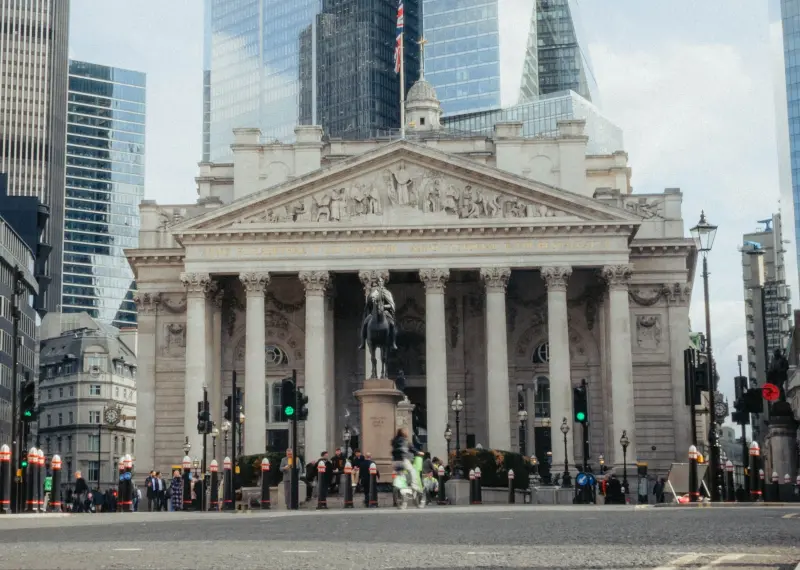
The Monetary Policy Committee voted 6–3 to keep Bank Rate unchanged, while the Bank warned that prolonged energy price pressures could push inflation higher.
The Bank of England has kept its main interest rate at 3.75%, but warned that a prolonged conflict in the Middle East could keep energy prices high and make it harder to bring inflation back to its 2% target.
The Monetary Policy Committee (MPC) voted 6–3 to hold Bank Rate at its meeting ending on 16 September. Three members — Megan Greene, Catherine L Mann and Huw Pill — voted for a 0.25 percentage-point increase to 4%.
The Bank said crude oil and wholesale gas prices had risen significantly since its July meeting. It also said UK CPI inflation had increased to 3.1% in August and was likely to rise further over the coming quarters.
Why the Bank Held Rates
The MPC said it was appropriate to keep Bank Rate at 3.75% for now.
One reason was the lack of clear evidence that higher energy costs had yet produced significant second-round effects in wages and prices. These effects can occur when businesses respond to higher costs with further price increases and workers seek higher wages, potentially making an initial inflation shock last longer.
The Bank said there was little evidence so far of material second-round effects in UK price and wage-setting.
However, it also said the risk of those effects becomes greater if higher energy prices remain elevated or volatile for longer.
The Committee therefore judged that the risks around the inflation outlook had moved further to the upside compared with July.
Three Members Wanted a Rate Rise
The September decision was not unanimous.
Greene, Mann and Pill all voted to raise Bank Rate to 4%.
The 6–3 split was the same as at the MPC’s July meeting, when three members also called for a quarter-point increase.
The Bank’s latest decision means the majority of policymakers still preferred to wait for more evidence before raising borrowing costs.
At the same time, the three votes for an increase show that there was already a significant case within the committee for responding to the renewed inflation pressure.
Inflation Could Rise Further
The Bank said the conflict in the Middle East had contributed to further increases in crude and refined energy prices.
At the close of business on 14 September, Brent crude was around $106 a barrel, while UK wholesale gas was about 207 pence per therm. The Bank said those prices were 36% and 78% higher respectively than the levels around the time of its July Monetary Policy Report.
UK consumer price inflation was already above the Bank’s 2% target before the September meeting.
The Office for National Statistics reported that CPI inflation rose to 3.1% in August, from 2.9% in July.
The Bank expects inflation to rise further before easing back towards target. How quickly that happens will depend partly on the size and duration of the energy shock and how it affects prices, wages and demand.
Markets Are Not Expecting a Clear-Cut Rate Path
Financial markets have been adjusting their expectations as the inflation outlook changes.
The Bank’s September Market Participants Survey, based on responses from 92 market participants, showed a median expectation of 3.75% for Bank Rate after the November meeting. The 75th percentile was 3.81%.
For the end of 2027, the median expectation was 3.50%, with the 25th and 75th percentiles at 3.25% and 3.75%.
The survey also found that energy and related commodity prices were the largest factor influencing respondents’ expectations for the near-term path of Bank Rate.
These figures are market participants’ expectations, not a forecast from the Bank of England.
The next MPC decision is due on 5 November.
Bank Sets Out New Gilt-Sales Plan
The interest-rate decision was accompanied by another important move for UK financial markets.
The MPC unanimously decided to reduce the stock of UK government bonds held for monetary policy purposes to zero over a multi-year period.
The Bank plans to reduce its holdings through annual gilt sales of £20 billion alongside bonds that mature naturally.
Overall, the Bank expects the remaining stock to be reduced at an average annual pace of around £46 billion by the end of 2034.
The Bank currently holds around £488 billion of gilts in its Asset Purchase Facility, based on purchase proceeds.
Under the new approach, around £222 billion of gilts that mature before 2035 will be held until maturity.
A further £120 billion of longer-dated gilts will remain in the portfolio to be held to maturity for the purpose of indirectly backing current and future banknote issuance.
That leaves around £146 billion of gilts, with maturities between 2035 and 2049, for the Bank to unwind through sales at an annualised pace of £20 billion.
Treasury Could Become Involved
The treatment of the £146 billion is not yet a completed government buyback.
The Bank said it has been working with HM Treasury and the Debt Management Office (DMO) on a possible model under which HM Treasury would instruct the DMO to purchase the gilts being sold by the Bank.
Any such purchases would take place at market prices and would be carried out under a pre-announced process.
The Bank said it will review the proposal before April 2027. If the approach proceeds, it could be incorporated into the DMO’s annual financing remit.
The Bank’s APF auctions will pause while these arrangements are considered.
This is part of the Bank’s wider quantitative tightening programme, which is gradually reducing the government bonds acquired through its earlier quantitative easing programmes.
What the Gilt Plan Means for Markets
The decision separates two issues that can sometimes become confused: Bank Rate and the Bank’s balance sheet.
Bank Rate remains the MPC’s main tool for influencing inflation. Quantitative tightening works by reducing the stock of assets the Bank holds for monetary policy purposes.
The Bank said the new multi-year approach was designed to continue reducing the gilt portfolio while taking account of market conditions and the longer-term structure of the remaining holdings.
For investors, the scale and timing of gilt sales matter because government bonds are a major part of the UK financial system. Changes in the supply and demand for gilts can affect bond prices and yields and, in turn, influence borrowing costs elsewhere in the economy.
The Bank’s September Market Participants Survey put the median expectation for the 10-year gilt yield at 5.00% at the end of December 2026 and 4.80% at the end of June 2027. Again, these are the views of survey respondents rather than official Bank forecasts.
What Happens Next
For the MPC, the immediate focus will be whether higher energy prices begin to feed more strongly into domestic inflation and wage-setting.
The Bank has not committed to a rate increase at its next meeting. Its September decision said the appropriate policy response would depend on the scale and duration of the energy shock and how it spreads through the economy.
For financial markets, the combination of above-target inflation, volatile energy prices and the Bank’s new quantitative-tightening plan means both interest rates and government bonds will remain important areas to watch.
The next MPC decision is scheduled for 5 November 2026.